
Why Education Job Seekers Choose Staffing Agencies: The Market Has Changed—Here’s How You Can Too.
The Evolving Staffing Landscape
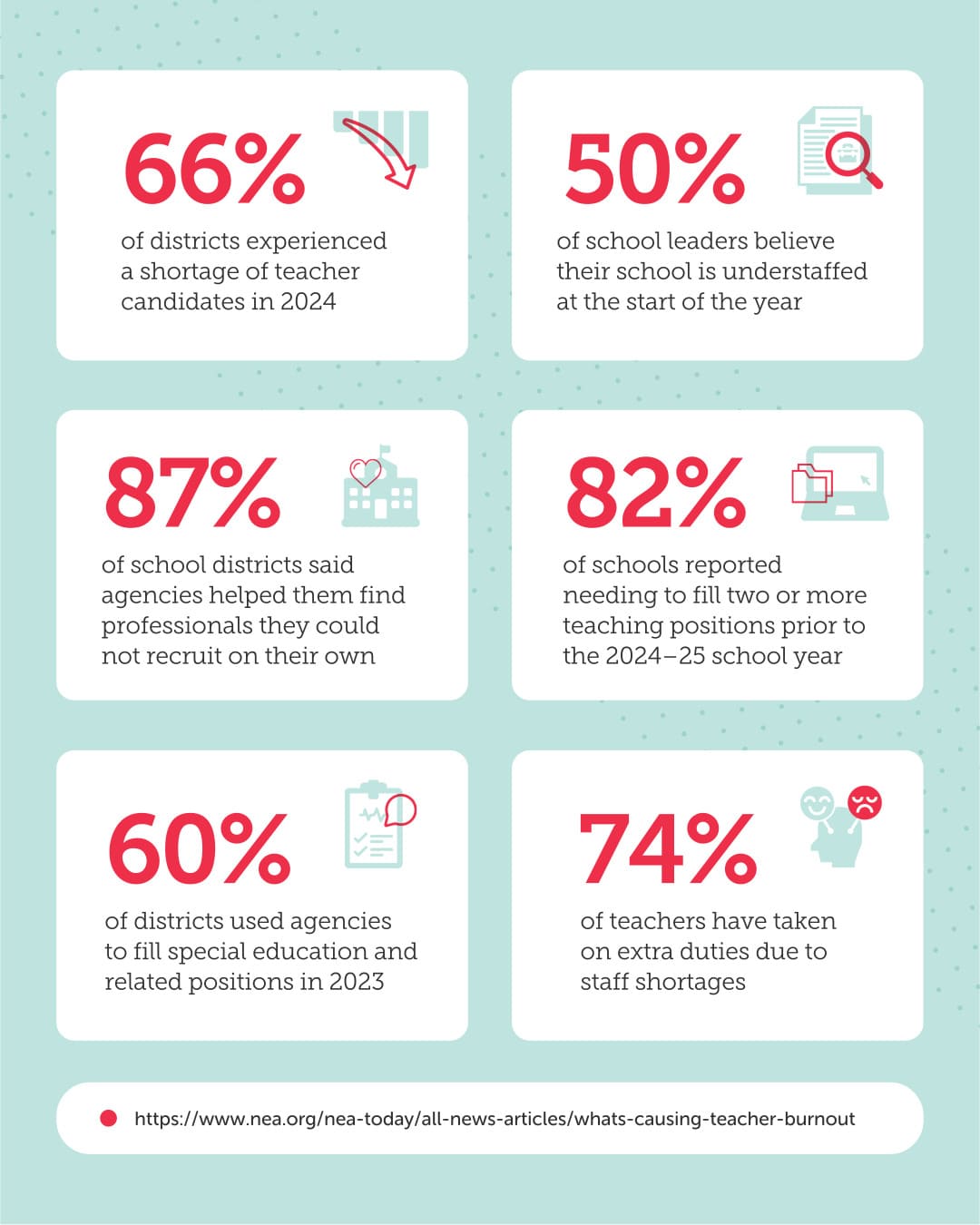
School districts nationwide face persistent staffing shortages, particularly in critical roles such as special education, STEM, and mental health services. According to the National Center for Education Statistics, 82% of public schools reported needing to fill two or more teaching positions prior to the 2024–25 school year, with shortages affecting urban, suburban, and rural districts alike. As a result, districts are increasingly turning to staffing agencies and flexible hiring models to maintain educational quality and continuity.
“It’s not about outsourcing — it’s about optimizing. When done right, staffing partnerships extend our capacity and protect our students.” — Superintendent respondent, AASA Survey 2023
Agencies Didn’t Break the System — They’re Filling the Gaps
1. Faster Placement & Expanded Opportunities
Staffing agencies maintain active pipelines of pre-screened candidates and multiple openings across districts, charter schools, and virtual settings, enabling quicker placements for educators, especially those relocating or between jobs.
Agencies can fill vacancies rapidly, minimizing classroom disruptions and ensuring students receive uninterrupted instruction.
“87% of school districts said staffing agencies helped them find professionals they could not recruit on their own, particularly in niche fields like BCBAs and ASL interpreters.” — Council of Administrators of Special Education (CASE), Specialized Services Staffing Survey, 2023
2. Flexibility and Work-Life Balance
Agencies offer contract, part-time, and remote roles, which are particularly attractive to educators seeking control over their schedules or wishing to work only part of the year.
Virtual and hybrid positions are increasingly available, especially for specialized service providers (e.g., SLPs, OTs), expanding the pool of candidates and meeting diverse educator needs.
“Rather than adapting working conditions, many districts still treat flexible staffing models as threats — missing a chance to modernize their talent approach.” — McKinsey & Company, Modernizing the Public Workforce, 2023
3. Competitive Pay & Benefits
Some agencies provide higher hourly rates than districts for hard-to-fill roles and offer perks such as weekly pay, 401(k) contributions, and health insurance.
- In 2025, 81% of agency placements are contract roles, with 11% contract-to-hire and 8% permanent placements, demonstrating the appeal of flexible compensation structures.
- Districts can use IDEA, ESSER, and Title I/IV funds to cover contract-based staffing in critical roles, improving service delivery without long-term fiscal commitments, according to the U.S. Department of Education, ESSER/IDEA Spending Guidelines, updated 2023.
4. Reduced Bureaucracy, Increased Support
Agencies often shield educators from district bureaucracy, offering one-on-one support, coaching, and advocacy that districts may lack.
Educators report feeling more valued and protected, with agencies acting quickly to resolve school-site conflicts and ensure positive work environments. Of those surveyed in a recent Rand Research Report, 51% of teachers report their work as being stressful, with 52% attributing their negative experience to taking on extra work because of staff shortages.
5. Agencies are Used as an Entry Point into Education
Agencies help recent graduates, re-entrants, and those relocating to new states navigate licensure and credentialing, lowering barriers to entry and providing valuable experience before pursuing district roles.
“SLPs and school psychs prefer staffing partners who advocate for appropriate caseloads and licensing assistance.” — American Speech-Language-Hearing Association (ASHA), 2023 Schools Survey
6. Specialization and Niche Roles
Specialized positions—school psychologists, speech-language pathologists, occupational therapists, interpreters, behavior analysts—are often better matched through agencies, which advocate for manageable workloads and appropriate placements.
Data Highlights for District Leaders
Debunking the “Agencies Are Stealing Our People” Narrative
Superintendents often hear complaints like: “That was our employee — now we’re paying more to get them back!”
Here’s why that sentiment is understandable, but not entirely accurate:
Yes, Agencies Cost More on Paper
While the hourly rate may appear higher, this markup typically includes payroll, compliance, benefits, credentialing assistance, and agency support districts would otherwise manage internally.
However, when districts struggle to fill roles, the alternative is unstaffed classrooms or burnout among existing team members; factors that are significantly more costly in the long run.
Agencies Aren’t Stealing. Candidates Are More Informed.
Education professionals are adults making informed decisions. If someone leaves a district job for agency work, it’s because the agency offered something the school district did not. The choice lies with the job seeker, not the recruiter. As a result, many educators placed by agencies form long-term bonds with schools and communities.
Bad Actors Exist — But They’re the Exception
Some agencies have engaged in aggressive or misleading recruitment tactics. These practices are harmful and should be called out, but they are not reflective of ethical staffing partners who prioritize student impact and educator’s well-being.
Good staffing firms aren’t just vendors. They’re collaborators, providing reporting, coaching, and ongoing oversight to protect outcomes for both staff and students. Over 70% of districts working with ethical staffing partners reported improved educator support, better problem resolution, and reduced HR burden.
The Talent Market Has Shifted
Districts no longer have a monopoly on educational employment. Like healthcare and tech, education is now a competitive labor market. Agencies didn’t cause this shift — they’re just responding to it faster than many school systems.
“Over 60% of districts used staffing agencies to fill special education and related service positions in 2023.” — AASA (The School Superintendents Association), 2023 Staffing Survey
Strategic Takeaways
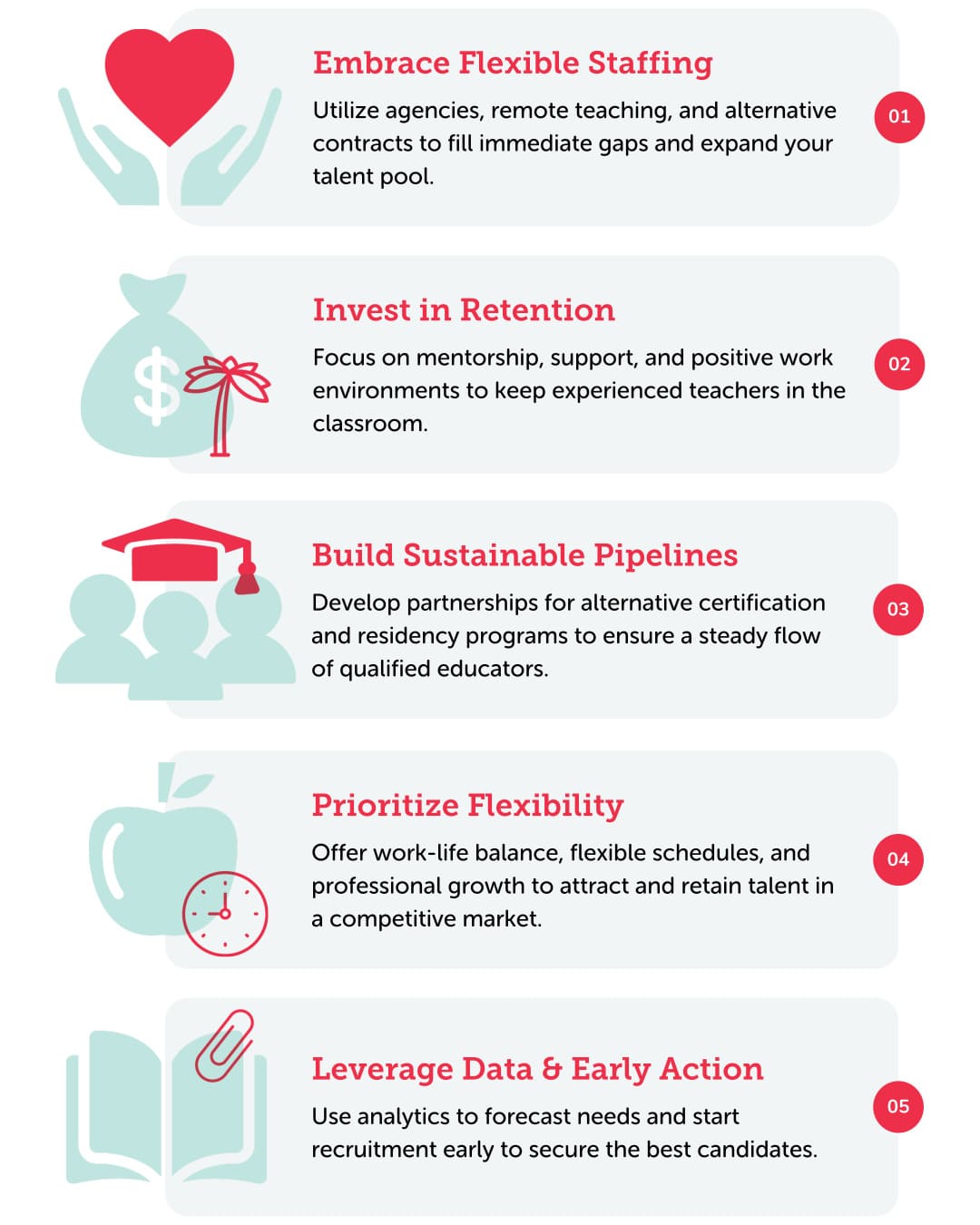
For further benchmarking, superintendents should monitor annual NCES reports and sector-specific staffing data to inform recruitment and retention strategies in this dynamic landscape.
By adopting these evidence-based staffing trends, superintendents and other school district leaders can more effectively address teacher shortages, ensure educational continuity, and build a resilient, future-ready workforce
Partner With Confidence
While the staffing landscape may feel unfamiliar or even uncomfortable for some districts, the right partner can turn hesitation into confidence, and gaps into opportunity.
At Soliant, we understand the pressures school leaders face, from ensuring compliance and student support to meeting the expectations of families, boards, and communities. Former educators, administrators, and therapists lead us with decades of education experience, who have helped build a reputation for being more than a placement agency. We’re your strategic partner.
“From the very beginning of our partnership with Soliant, it was evident that they were a company dedicated to our success. Their commitment to our vision and goals has been unwavering, and it’s clear that they take the time to understand the unique needs and challenges of our school district.” — Lynn Jameson, Executive Director of Special Education
Whether you’re navigating a hard-to-fill role, supporting a growing special education population, or looking to lighten the load on your existing team, Soliant brings national reach, credentialing expertise, and hands-on support to every placement. Our dedicated teams work alongside school leaders to ensure seamless integration, strong educator performance, and outcomes that truly serve students.
Let Soliant help fill your open education roles. Submit a request for talent today →
Hire Professionals
We'd love to begin helping you today. Give us a call at 800.849.5502 or contact us today to submit an online request for healthcare talent.

