What is a Deaf and Hard of Hearing Specialist?

School Deaf and Hard of Hearing Specialist Requirements & Role

The role of a deaf and hard-of-hearing (DHH) specialist is essential in creating an inclusive and supportive environment for students with hearing impairments.

If you’re interested in pursuing a career that involves making a significant impact on the lives of students with hearing loss, this guide from Soliant Health will provide a comprehensive overview of the DHH specialist job description, including their responsibilities, education requirements, salary expectations, and more!

What is a Deaf and Hard of Hearing Specialist?

A deaf and hard-of-hearing specialist is a trained professional who works with students who have hearing impairments, helping them overcome communication and educational challenges. These specialists provide individualized support, ensuring that students have access to the resources needed to thrive in school and participate in educational activities.

Deaf and Hard of Hearing Specialist Job Description

Deaf and hard-of-hearing specialist job descriptions are multi-faceted. For example, the special education role is dynamic and requires a combination of educational knowledge, specialized skills, and compassion to create an inclusive environment for students with hearing impairments.

DHH specialists also help with behavior management, communication skills, and language development, ensuring that students are equipped to navigate both academic and social challenges. They are usually involved in teaching students basic language skills, working with classroom teachers to modify lessons, and helping students adjust to school life by providing emotional and social support.

DHH Specialist Responsibilities

Primary responsibilities of school deaf and hard-of-hearing specialists typically include:

  • Assessing Student Needs: Evaluate students’ hearing abilities and develop strategies to help them succeed in the classroom.
  • Providing Communication Support: Use various communication methods, including American Sign Language (ASL) or speech therapy, depending on the student’s needs.
  • Collaborating with Educators: Work closely with teachers to modify lessons, ensure accessibility, and implement accommodations such as captioning or hearing aids.
  • Developing Individualized Education Plans (IEPs): Participate in creating and implementing IEPs that cater to the specific needs of students with hearing loss.
  • Supporting Classroom Integration: Ensure that students with hearing loss can fully participate in classroom activities, extracurricular events, and social interactions.
  • Parent and Family Communication: Work with parents and caregivers to provide guidance on how to support their child’s development at home.

Deaf and Hard of Hearing Specialist Education Requirements

Below are some of the key DHH specialist education requirements:

  1. Bachelor’s Degree: A bachelor’s degree in education, special education, audiology, or a related field is typically the first step. Some candidates may also pursue a degree specifically in Deaf Education.
  2. Master’s Degree (Optional but Preferred): Many employers prefer or require a master’s degree in Deaf Education or a related field. This additional education provides specialized knowledge and prepares you for more advanced responsibilities.
  3. Certification: In most states, a state-issued certification in Deaf Education or special education is required. In some cases, a certification in American Sign Language (ASL) or a related communication modality may be required or preferred.
  4. Experience: Experience in a school or classroom setting is essential, particularly for those looking to work directly with students with hearing impairments. Internships or volunteer opportunities in schools for the deaf can provide invaluable hands-on experience.

Deaf and Hard of Hearing Specialist Salary

The salary of a deaf and hard-of-hearing specialist can vary greatly depending on factors such as education, experience and the specific school or district; however, the median salary was estimated to be roughly $65,000 in 2024, with salaries ranging from approximately $40,000 to as high as $110,000.

Explore Deaf and Hard of Hearing Specialist Opportunities

Ready to take the next step in your deaf and hard-of-hearing specialist career? Explore Soliant’s current job listings for DHH specialists in schools to find the perfect role that aligns with your skills and aspirations, or explore education job openings in related fields, including school audiology, special education, sign language, school therapy, and more. Whether you’re looking for a full-time permanent position or a remote role, we have hundreds of opportunities waiting for you today!

Looking for more information about school opportunities? Browse Soliant’s additional education career resources to help you succeed in your professional journey. Start making an impact today!
How to Become a Behavior Specialist in Schools

Behavior Specialist Education Requirements, Career Path, & More

Behavior specialists are truly making a difference in the lives of students, especially those facing behavioral, emotional, or developmental challenges. These professionals work directly with students to develop strategies that help improve behavior, build social skills, and support academic success.

If you’re someone who’s passionate about helping kids overcome obstacles and thrive in school, becoming a behavior specialist could be an incredibly rewarding career. In this guide, Soliant school career experts walk you through how to become a behavior specialist, covering everything from the education you’ll need to the incredible impact you can have.

How to Become a Behavior Specialist in Schools: Step-by-Step Guide

If you’re interested in becoming a behavior specialist, here’s a step-by-step guide to help you navigate the path to this rewarding career:

Step 1: Meet the Behavior Specialist Education Requirements

The first step toward becoming a behavior specialist is earning a bachelor’s degree, a crucial behavior specialist education requirement. While a master’s degree isn’t always necessary, many behavior specialists choose to pursue advanced education to deepen their knowledge and boost their qualifications.

If you’re thinking about going a step further and becoming a Board Certified Behavior Analyst (BCBA), which is a higher-level certification in behavior analysis, then a master’s degree is a must. This degree typically covers subjects like applied behavior analysis (ABA), developmental psychology, and how to collect and analyze data, all of which will help you excel in your career as a behavior specialist.

What Degree Do You Need to be a Behavior Specialist?

While there isn’t a specific major required, a bachelor’s degree in psychology, social work, education, or special education is an excellent starting point. A background in these areas will provide you with the foundational knowledge needed to understand behavioral issues, child development, and educational systems.

A master’s degree in behavior analysis, special education, or psychology can provide you with specialized skills in behavior modification, intervention strategies, and working with children with complex needs.

Step 2: Gain Relevant Experience

Once you’ve earned your bachelor’s degree, getting hands-on experience is key to becoming a successful behavior specialist. Many start out as teaching assistants, behavioral technicians, or in other entry-level roles where they get to work directly with students in school settings. This experience will give you the chance to apply behavior strategies, learn how classrooms operate, and understand how to work with students who have various behavioral needs.

If possible, look for internships, volunteer opportunities, or part-time jobs that allow you to work with children or individuals with special needs. The more direct experience you gain, the better prepared you’ll be to step into a full-time behavior specialist role.

Step 3: Obtain Relevant Behavior Specialist Certifications

State certification requirements for behavior specialists can vary depending on the location and role. However, many specialists also pursue certification in applied behavior analysis (ABA), such as becoming a Registered Behavior Technician (RBT) or working toward BCBA certification.

Typically, the process of getting certified involves completing a set number of supervised practice hours, passing exams, and meeting continuing education requirements. If you plan to work in public schools, you may also need state-specific certification or licensure in special education or school counseling.

Step 4: Apply for Roles

Once you’ve completed your education and certifications, it’s time to start applying for behavior specialist roles! When you’re starting your search, make sure you carefully read through the job description to ensure it matches your skills and experience.

Consider the type of environment you’d like to work in. Do you prefer a larger school district with diverse populations? Or would you like to work in a smaller, more specialized setting? What about the age group of children you’d like to work with?

The job search process can feel a bit overwhelming, but with the right approach, you can find a role that’s a perfect fit.

Explore Behavior Specialist Opportunities

Becoming a behavior specialist is a highly rewarding career that allows you to make a significant impact on the lives of students. Explore Soliant’s wide variety of school behavior specialist job opportunities today to find the perfect role for you!

Looking for more information about behavior specialist careers? Check out Soliant’s additional school career resources here, including helpful guides, tips, and more to support your career journey. Start making a difference today!

Why Education Job Seekers Choose Staffing Agencies: The Market Has Changed—Here’s How You Can Too. 

The Evolving Staffing Landscape 

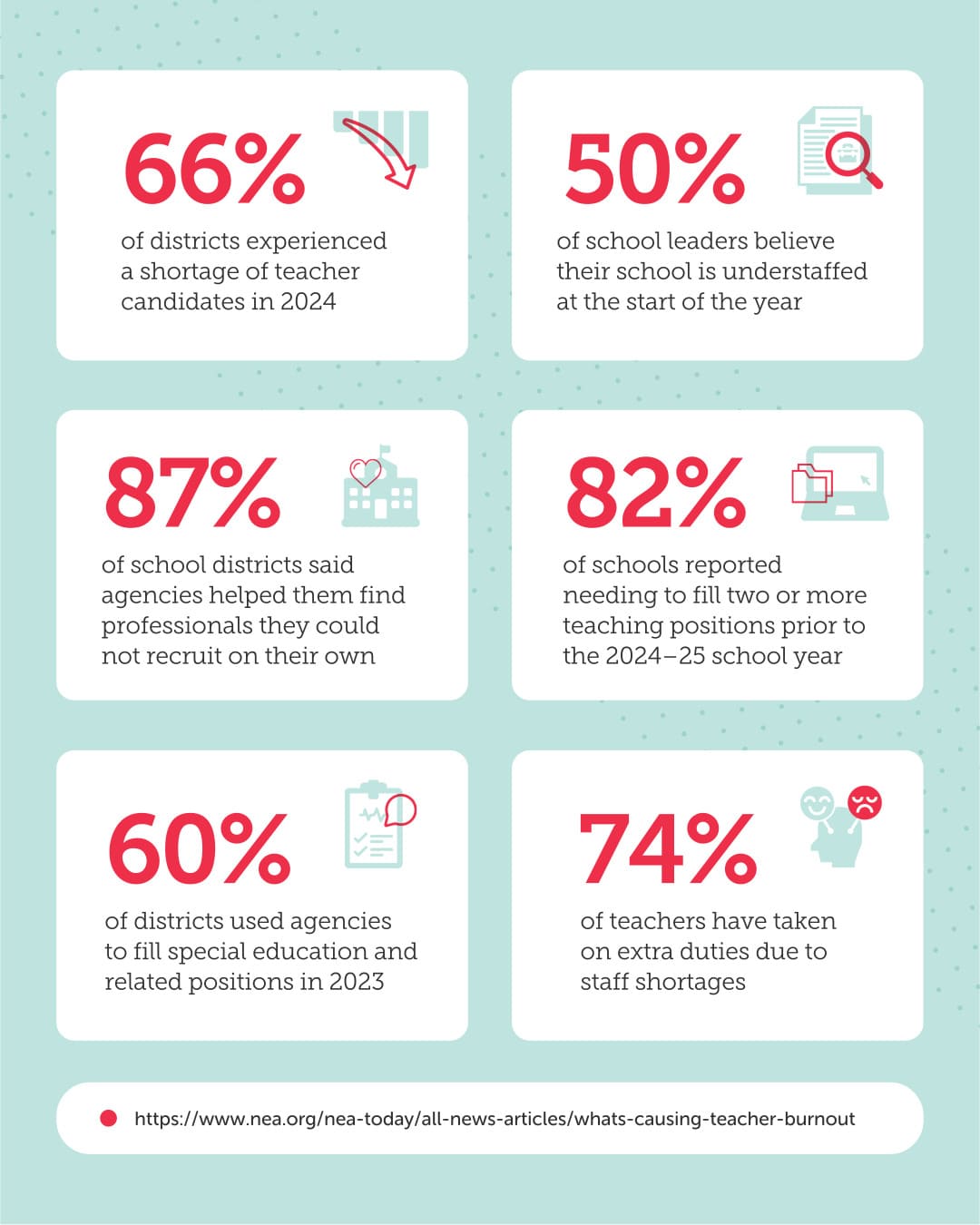
School districts nationwide face persistent staffing shortages, particularly in critical roles such as special education, STEM, and mental health services. According to the National Center for Education Statistics, 82% of public schools reported needing to fill two or more teaching positions prior to the 2024–25 school year, with shortages affecting urban, suburban, and rural districts alike. As a result, districts are increasingly turning to staffing agencies and flexible hiring models to maintain educational quality and continuity.

“It’s not about outsourcing — it’s about optimizing. When done right, staffing partnerships extend our capacity and protect our students.” Superintendent respondent, AASA Survey 2023 

Agencies Didn’t Break the System — They’re Filling the Gaps 

1. Faster Placement & Expanded Opportunities 

Staffing agencies maintain active pipelines of pre-screened candidates and multiple openings across districts, charter schools, and virtual settings, enabling quicker placements for educators, especially those relocating or between jobs. 

Agencies can fill vacancies rapidly, minimizing classroom disruptions and ensuring students receive uninterrupted instruction.

87% of school districts said staffing agencies helped them find professionals they could not recruit on their own, particularly in niche fields like BCBAs and ASL interpreters.” Council of Administrators of Special Education (CASE), Specialized Services Staffing Survey, 2023 

2. Flexibility and Work-Life Balance

Agencies offer contract, part-time, and remote roles, which are particularly attractive to educators seeking control over their schedules or wishing to work only part of the year. 

Virtual and hybrid positions are increasingly available, especially for specialized service providers (e.g., SLPs, OTs), expanding the pool of candidates and meeting diverse educator needs. 

“Rather than adapting working conditions, many districts still treat flexible staffing models as threats — missing a chance to modernize their talent approach.” — McKinsey & Company, Modernizing the Public Workforce, 2023 

3. Competitive Pay & Benefits 

Some agencies provide higher hourly rates than districts for hard-to-fill roles and offer perks such as weekly pay, 401(k) contributions, and health insurance. 

  • In 2025, 81% of agency placements are contract roles, with 11% contract-to-hire and 8% permanent placements, demonstrating the appeal of flexible compensation structures. 
  • Districts can use IDEA, ESSER, and Title I/IV funds to cover contract-based staffing in critical roles, improving service delivery without long-term fiscal commitments, according to the U.S. Department of Education, ESSER/IDEA Spending Guidelines, updated 2023. 

4. Reduced Bureaucracy, Increased Support 

Agencies often shield educators from district bureaucracy, offering one-on-one support, coaching, and advocacy that districts may lack. 

Educators report feeling more valued and protected, with agencies acting quickly to resolve school-site conflicts and ensure positive work environments. Of those surveyed in a recent Rand Research Report, 51% of teachers report their work as being stressful, with 52% attributing their negative experience to taking on extra work because of staff shortages. 

5. Agencies are Used as an Entry Point into Education 

Agencies help recent graduates, re-entrants, and those relocating to new states navigate licensure and credentialing, lowering barriers to entry and providing valuable experience before pursuing district roles.

“SLPs and school psychs prefer staffing partners who advocate for appropriate caseloads and licensing assistance.” American Speech-Language-Hearing Association (ASHA), 2023 Schools Survey 

6. Specialization and Niche Roles 

Specialized positions—school psychologists, speech-language pathologists, occupational therapists, interpreters, behavior analysts—are often better matched through agencies, which advocate for manageable workloads and appropriate placements. 

Data Highlights for District Leaders 

Debunking the “Agencies Are Stealing Our People” Narrative 

Superintendents often hear complaints like: “That was our employee — now we’re paying more to get them back!” 

Here’s why that sentiment is understandable, but not entirely accurate: 

Yes, Agencies Cost More on Paper 

While the hourly rate may appear higher, this markup typically includes payroll, compliance, benefits, credentialing assistance, and agency support districts would otherwise manage internally.  

However, when districts struggle to fill roles, the alternative is unstaffed classrooms or burnout among existing team members; factors that are significantly more costly in the long run. 

Agencies Aren’t Stealing. Candidates Are More Informed.  

Education professionals are adults making informed decisions. If someone leaves a district job for agency work, it’s because the agency offered something the school district did not. The choice lies with the job seeker, not the recruiter. As a result, many educators placed by agencies form long-term bonds with schools and communities. 

Bad Actors Exist — But They’re the Exception 

Some agencies have engaged in aggressive or misleading recruitment tactics. These practices are harmful and should be called out, but they are not reflective of ethical staffing partners who prioritize student impact and educator’s well-being. 

Good staffing firms aren’t just vendors. They’re collaborators, providing reporting, coaching, and ongoing oversight to protect outcomes for both staff and students. Over 70% of districts working with ethical staffing partners reported improved educator support, better problem resolution, and reduced HR burden

The Talent Market Has Shifted 

Districts no longer have a monopoly on educational employment. Like healthcare and tech, education is now a competitive labor market. Agencies didn’t cause this shift — they’re just responding to it faster than many school systems. 

Over 60% of districts used staffing agencies to fill special education and related service positions in 2023.” — AASA (The School Superintendents Association), 2023 Staffing Survey 

Strategic Takeaways 

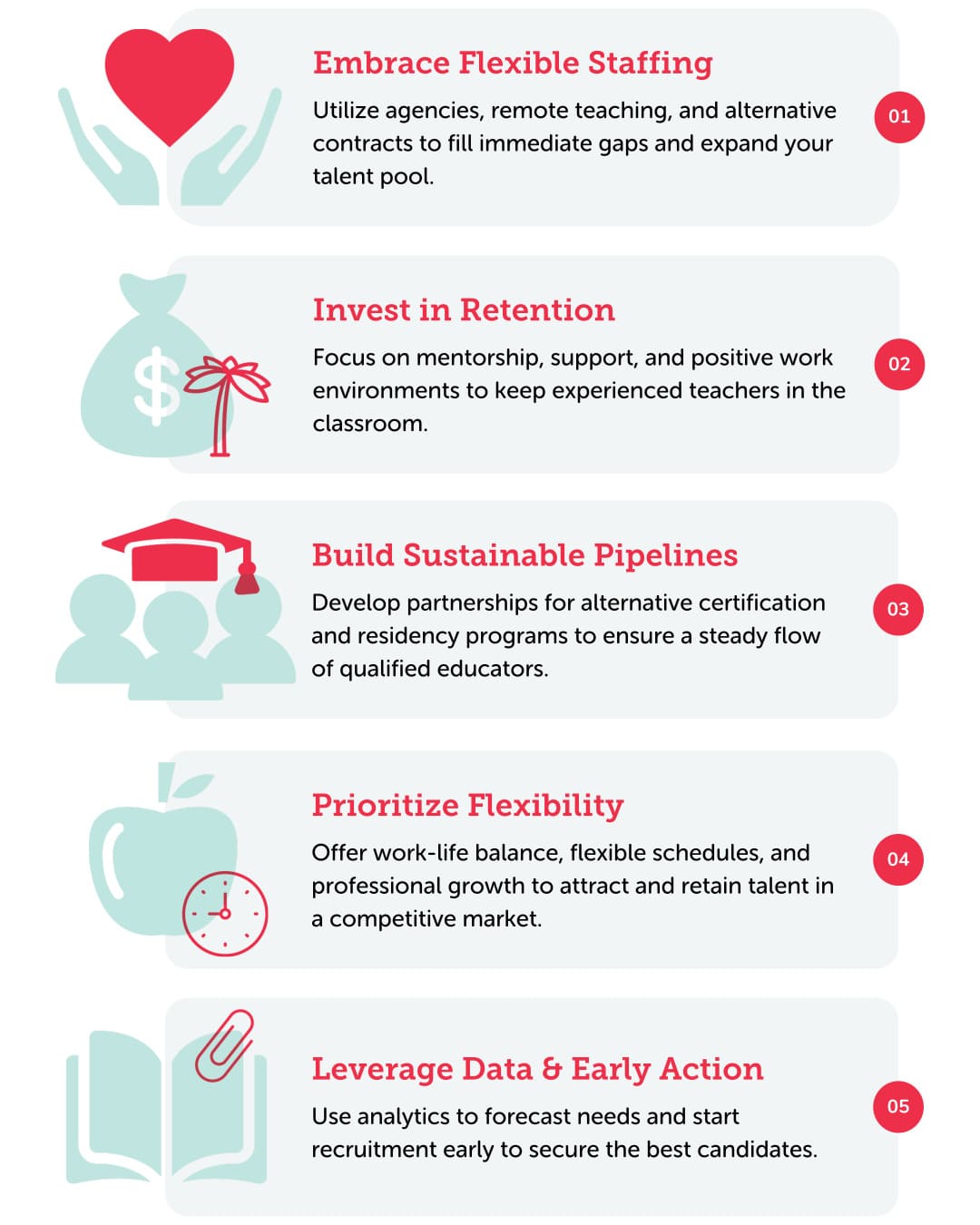
For further benchmarking, superintendents should monitor annual NCES reports and sector-specific staffing data to inform recruitment and retention strategies in this dynamic landscape. 

By adopting these evidence-based staffing trends, superintendents and other school district leaders can more effectively address teacher shortages, ensure educational continuity, and build a resilient, future-ready workforce

Partner With Confidence 

While the staffing landscape may feel unfamiliar or even uncomfortable for some districts, the right partner can turn hesitation into confidence, and gaps into opportunity. 

At Soliant, we understand the pressures school leaders face, from ensuring compliance and student support to meeting the expectations of families, boards, and communities. Former educators, administrators, and therapists lead us with decades of education experience, who have helped build a reputation for being more than a placement agency. We’re your strategic partner. 

“From the very beginning of our partnership with Soliant, it was evident that they were a company dedicated to our success. Their commitment to our vision and goals has been unwavering, and it’s clear that they take the time to understand the unique needs and challenges of our school district.” Lynn Jameson, Executive Director of Special Education

Whether you’re navigating a hard-to-fill role, supporting a growing special education population, or looking to lighten the load on your existing team, Soliant brings national reach, credentialing expertise, and hands-on support to every placement. Our dedicated teams work alongside school leaders to ensure seamless integration, strong educator performance, and outcomes that truly serve students. 

Let Soliant help fill your open education roles. Submit a request for talent today →

Signs Your School Needs a Special Education Staffing Partner


A Decision-Making Framework 

Special education leaders face unique pressures—student needs, legal mandates, staffing shortages, and budget constraints. Not every vacancy requires outside help, but knowing when to bring in a staffing partner can be the difference between staying compliant and falling behind.

Use a Staffing Partner When…

‘You’ve had an open Special education teacher position for 30+ days.’

  • Chronic shortages threaten service delivery and compliance.
  • Staffing partners can step in quickly with credentialed professionals.

‘You have overdue IEPs and can’t meet service minutes.’

  • Missing timelines can result in state audits or loss of funding.
  • A staffing partner can provide licensed staff to prevent further backlog.

‘You’re cycling through paraprofessionals every few weeks.’

  • Frequent turnover disrupts student continuity.
  • Staffing firms often offer better pay, benefits, and retention.

‘You can’t find a bilingual SLP or school psychologist.’

  • Roles that require niche credentials are tough to fill locally.
  • Agencies have national networks and passive candidates.

‘You’re opening a self-contained autism classroom next semester.’

  • Short timelines for new initiatives demand quick staffing.
  • Partners can help you scale fast without sacrificing quality.

‘We need coverage, but we don’t want to over-hire permanent staff.’

  • Flexible, short-term placements avoid unnecessary long-term costs.
  • Temp-to-perm models let you ‘try before you buy.’

Decision-Making Checklist

  • Have we tried internal recruitment for 30+ days without success?
  • Is student learning or compliance being impacted?
  • Is this a temporary or niche role that’s hard to fill?
  • Do we need to move faster than our internal HR process allows?
  • Could a flexible or contract-based solution meet our needs?

Soliant specializes in special education staffing solutions designed for real-world school challenges. Whether it’s filling one position or staffing an entire program, we partner with districts to deliver quality, credentialed professionals.

20-Year Partnership Places 150+ Special Educators in Colorado’s 6th Largest District

20+ Years

of partnership

150+

special education professionals placed

Our Partner

The 6th largest school district in Colorado, serving more than 30,000 students through 59 schools.

The Challenge

Our partner supports a uniquely diverse student population, representing over 130 countries and speaking more than 160 languages across the district. This remarkable diversity underscores the critical need for dedicated professionals who can deliver exceptional education and care—particularly for students with special needs.

The district is also home to one of the nation’s largest children’s hospitals, where they deliver educational services to medically fragile children. To ensure every student has the opportunity to thrive, the district relies on staffing agency support to garner highly qualified education professionals capable of meeting diverse learning needs.

Our Solution

For more than 20 years, Soliant has been a trusted partner in staffing quality special education professionals for our client. By leveraging our deep knowledge in the education space and our extensive candidate network, we’ve successfully placed skilled education professionals across the district who are equipped to support their students, parents, and teachers.

Our recruiting partnership approach ensures that students receive the proper education services to thrive while giving parents and educators the necessary resources to feel supported.

Results

Soliant’s commitment to providing dedicated account management who understands our partner’s unique needs and recruiting the right talent has led to measurable improvements for the district, including:

  • Enhanced quality of education and student support particularly for their bilingual students
  • Increased ability to locate and fill highly-specialized, hard-to-fill roles
  • Lower costs associated with hiring, onboarding, and training new staff

Types of Placements Provided:

  • Medically Fragile School Nurses
  • Speech-Language Pathologists (SLPs)
  • Tele-SLPs
  • Bilingual SLPs
  • Special Education Teachers
  • Occupational Therapists
  • Paraprofessionals
  • Social workers
  • School Psychologists

About Soliant

Soliant is a leading provider of therapy and special education professionals, specializing in both contract and direct hire placements for schools nationwide. With a reputation for excellence and client satisfaction, we are a trusted partner in helping education organizations meet their evolving needs.

Soliant Helps 92,000 Students Succeed with 75+ Specialized Hires

5+ Years

of partnership

75+

special education professionals placed

Our Partner

The 3rd largest school district in Georgia, serving a diverse population of over 92,000 students through 138 schools and centers.

The Challenge

Our partner serves a highly diverse student population—representing over 172 languages and 155 nations. This diversity presents unique challenges in delivering equitable and effective education, particularly for students with special needs.

While the district is not facing an immediate staffing crisis, filling highly specialized, hard-to-staff roles remains a persistent challenge. The district requires professionals who not only meet stringent educational qualifications but can also build strong partnerships with students, parents, and teachers to support holistic student success.

Our Solution

Since 2020, Soliant has built a trusted, enduring partnership with the district. We are proud to be a preferred staffing agency, chosen consistently when vacancies arise. This ongoing relationship is a testament to the quality, reliability, and cultural alignment of the professionals we provide.

A key factor in the success of our collaboration is the high rate of annual renewals among Soliant-placed professionals. This stability is not only cost-effective, saving the district time and resources on repeated onboarding and training, but also promotes continuity of education and care, which is critical in special education environments.

Results

Soliant’s personalized approach—centered on understanding the district’s unique needs—has led to tangible, positive outcomes:

  • Continuity in staffing has reduced the need for frequent training and orientation sessions.
  • Students benefit from familiar, consistent teachers and therapists, which strengthens trust and improves educational and behavioral outcomes.
  • Teachers and parents experience stronger collaboration, knowing they can rely on a stable team of professionals.

Types of Placements Provided:

  • Speech-Language Pathologists (Onsite and Teletherapy)
  • Occupational Therapists (OTs)
  • Physical Therapists (PTs)
  • Registered Behavioral Therapists
  • Paraprofessionals

About Soliant

Soliant is a leading provider of therapy and special education professionals, specializing in both contract and direct hire placements for schools nationwide. With a reputation for excellence and client satisfaction, we are a trusted partner in helping education organizations meet their evolving needs.